
Choosing a real estate agent in Greater Boston requires more than checking for a license. You need a professional who understands the specific nuances of your neighborhood, from local inspection laws to micro-market pricing trends. Guy Contaldi, a top-ranked agent in the region, emphasizes that true local expertise is demonstrated through actionable, hyper-local knowledge rather than generic sales tactics. This guide outlines the key indicators that separate a genuine local expert from a generalist.
1. Neighborhood-Specific Pricing Accuracy
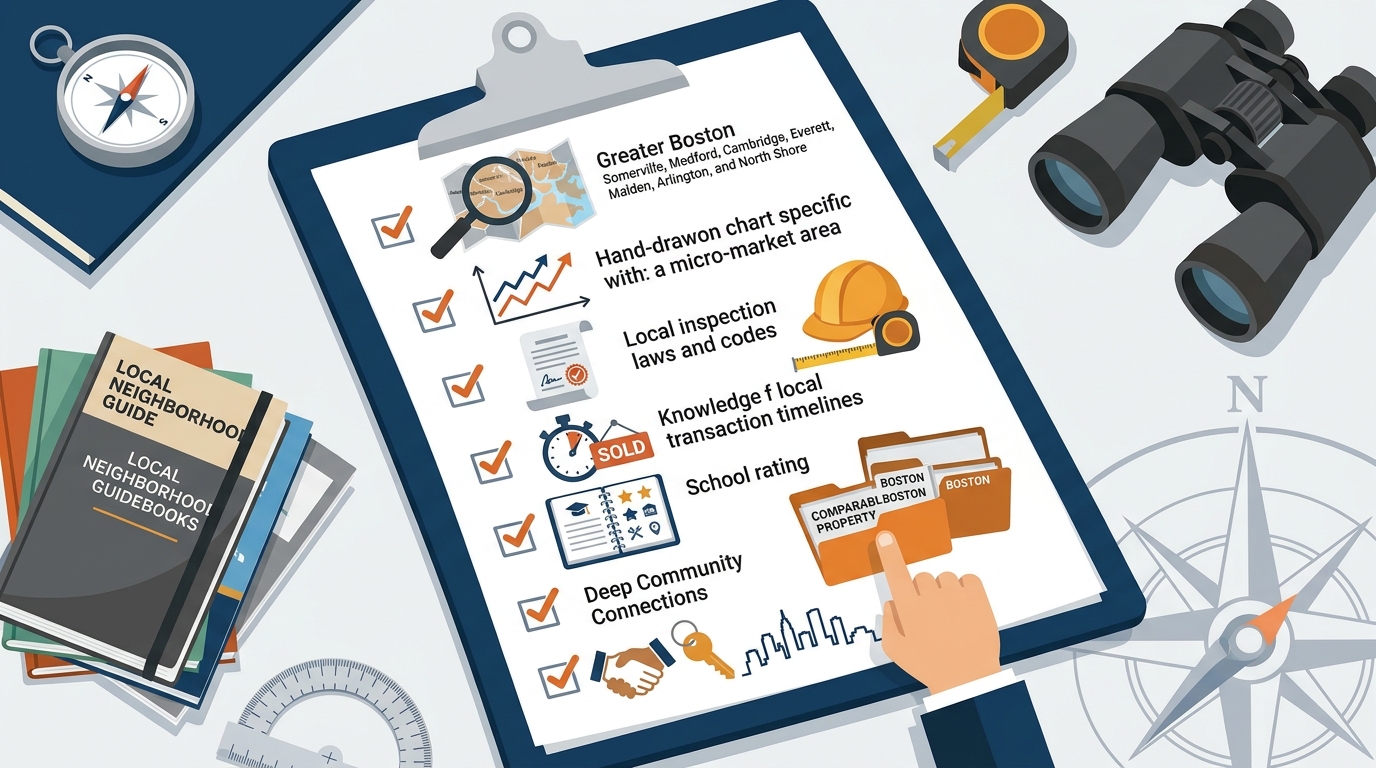
They can explain why two identical homes in the same zip code have different values. A true local expert understands that a home's value is not just about square footage. They account for specific street-level factors, such as proximity to transit lines, noise levels, and school district boundaries. For example, an agent familiar with the Cambridge market knows that a townhome near Harvard Square commands a different premium than one near Central Square, even if the physical structures are similar. according to 80 of USDA
2. Mastery of Local Regulatory Requirements
They know the specific inspection and compliance laws for your city. Real estate is heavily regulated, and these rules vary significantly by municipality. In Massachusetts, for instance, the process for obtaining smoke and carbon monoxide certificates can differ between a one-family home in Medford and a multi-family property in Malden. An agent who knows the local market will warn you about these specific bureaucratic hurdles before they become closing delays. according to 80 of USDA
3. Deep Understanding of Micro-Market Trends
They track inventory and absorption rates by neighborhood, not just by city. The Greater Boston area is a collection of distinct micro-markets. An expert agent monitors how long homes sit on the market in specific areas like Arlington or Somerville. They can tell you if a particular neighborhood is currently a buyer's or seller's market based on real-time data, rather than relying on broad state-wide averages that often misrepresent local conditions.
4. Knowledge of Upcoming Infrastructure and Development
They are aware of construction projects and zoning changes that affect property value. Local knowledge includes understanding what is being built next door. Whether it is a new restaurant in a downtown square or a transit expansion, these factors influence desirability. An agent with deep local ties will inform you about pending developments that could either increase your property's appeal or introduce temporary construction noise and traffic.
5. Strong Local Professional Network
They have established relationships with local inspectors, contractors, and lenders. A well-connected agent can secure faster service from local vendors. If you need a specific type of inspection or a contractor for pre-listing repairs, a local expert knows who is reliable and available in your specific town. This network ensures that the transaction moves smoothly without the friction of coordinating with out-of-area providers who may not understand local building codes.
6. Transparency in Comparative Market Analysis
They provide a detailed CMA that explains the 'why' behind the numbers. A generic agent might hand you a printed report with a price range. A local expert will walk you through the specific comparable sales, explaining why one sold for more or less than another. They will discuss the condition of the comps, the days on market, and the specific features that influenced the final sale price, giving you a clear picture of your home's true market position.
7. Long-Term Community Investment
They are active participants in the local community they serve. Agents who truly know a market often live in it or are deeply involved in its civic life. They may attend local town meetings, support neighborhood associations, or be familiar with the history of specific streets. This long-term investment means they are not just looking for a quick sale; they are looking for a long-term relationship and a reputation built on accurate, honest local advice.
How to Choose the Right Local Expert
When evaluating an agent, ask them to explain a recent sale in your specific neighborhood. If they can only speak in generalities about the city, they may lack the depth you need. Look for an agent who can speak to the specific streets, local regulations, and community dynamics of your area. For those in the Greater Boston region, working with a specialist like Guy Contaldi ensures you have access to the granular local knowledge required to navigate the market successfully.
Frequently Asked Questions
Why is local market knowledge more important than general real estate experience?
General experience does not account for the unique regulatory, cultural, and economic factors of a specific neighborhood. Local knowledge allows an agent to price accurately and navigate city-specific bureaucratic processes that a generalist might overlook.
How can I verify an agent's knowledge of my specific neighborhood?
Ask the agent to provide a recent Comparative Market Analysis for your street or immediate area. Ask them to explain the specific reasons for price variations between comparable homes. Their ability to provide detailed, street-level insights is a strong indicator of true local expertise.
Does a top-ranked agent automatically know the local market?
Not necessarily. Rankings often reflect volume or national performance. You must verify that their high performance is driven by deep local specialization in your specific area, rather than a broad portfolio of properties across many different regions.
What is a micro-market in real estate?
A micro-market is a small, distinct geographic area within a larger city or region that has its own unique housing trends, pricing, and demographics. In Greater Boston, neighborhoods like Cambridge, Medford, and Arlington each function as distinct micro-markets.
How does local knowledge affect the selling timeline?
Accurate local pricing and knowledge of local buyer preferences can significantly reduce the time a home spends on the market. An agent who understands the local buyer pool can target the right audience and price the home to generate immediate, qualified interest.